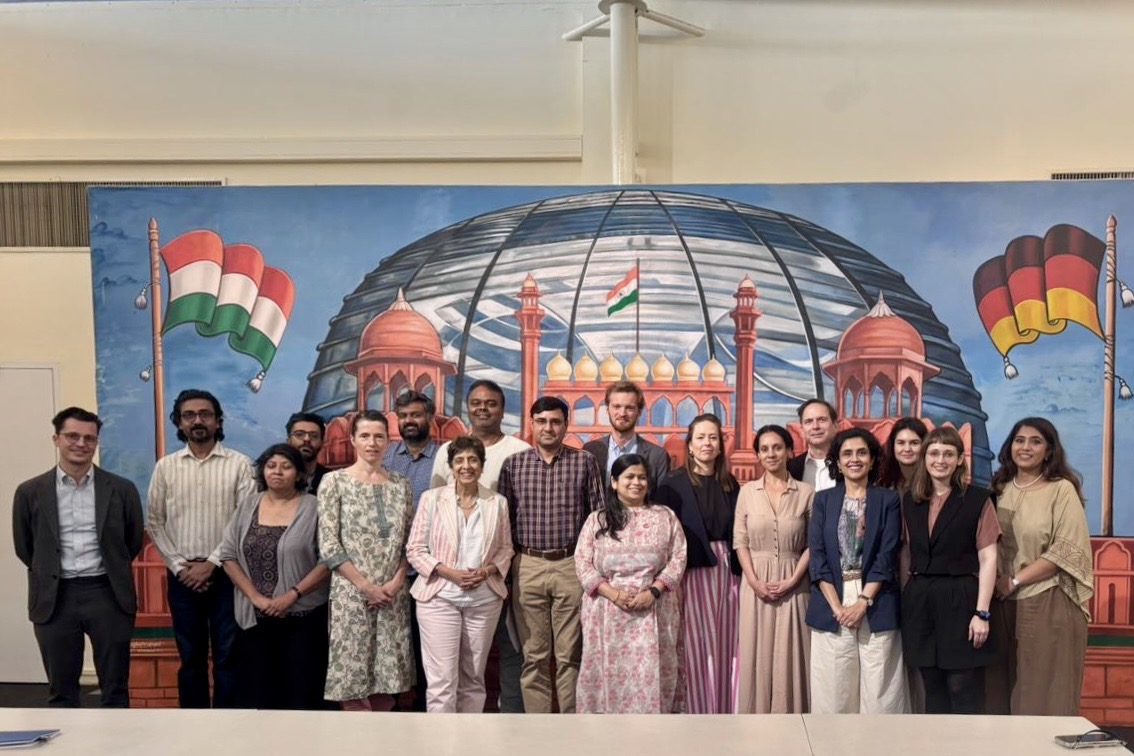
Participants at the Indo-German Media Network roundtable at the German Embassy in New Delhi, 5 March 2026.
An interactive roundtable hosted by the Embassy of Germany to India on 5 March brought together journalists, policy experts and media practitioners to reflect on how India and Germany perceive each other and how stronger reporting can improve bilateral understanding. Organised by the Indo-German Media Network, the discussion focused on prevailing narratives, blind spots in media coverage and opportunities for strengthening cross-border journalism.
Germany’s Ambassador Philipp Ackermann provided opening remarks, noting that 2026 marks 75 years of diplomatic relations between the two countries. The year began with the visit of German Chancellor Friedrich Merz to India in January and will culminate in the Inter-Governmental Consultations scheduled in Berlin later this year.
India is receiving renewed attention across Europe, with smaller countries also expanding their engagement. For example, the participation of the Finnish President at the Raisina Dialogue reflects growing European interest in India’s strategic and economic trajectory. Between India and Germany, people-to-people connections are also expanding. The Indian diaspora in Germany, for example, has grown to over 300,000 people, contributing significantly to economic and cultural exchanges.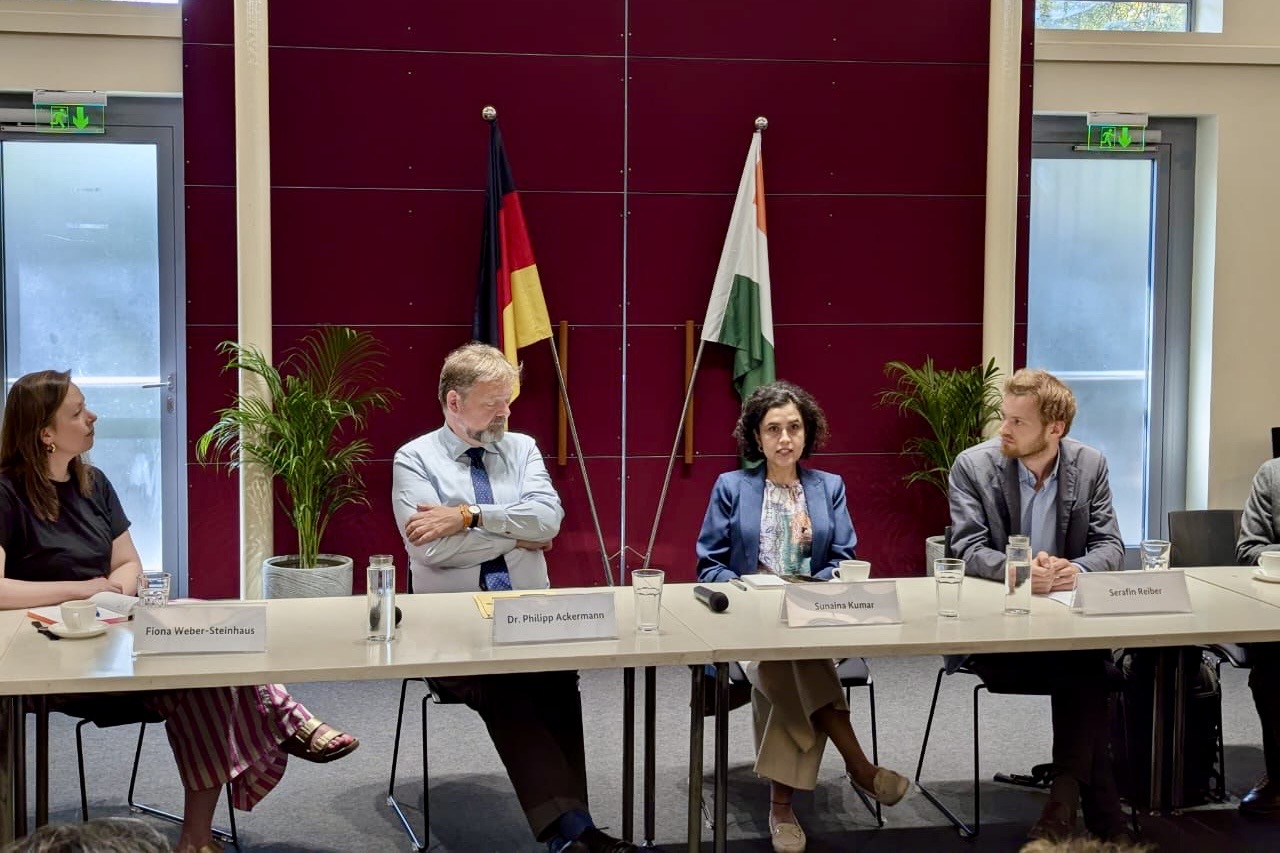
A scene from the discussion with Philipp Ackermann, guest Serafin Reiber (Der Spiegel) and IGMN members.
Setting the scene for the discussion, Sunaina Kumar, Director and Senior Fellow at the Observer Research Foundation (ORF), reflected on the evolution of the Indo-German Media Network over the past decade. Originally supported by the Robert Bosch Foundation, the network has continued to foster collaboration among journalists and researchers even after the formal programme concluded.
Offering a newsroom perspective, Fiona Weber-Steinhaus, Team Lead at the foreign desk of Die Zeit, identified key challenges in cross-border reporting between India and Germany. One example is the issue of limited resources: many media organisations in both countries no longer maintain permanent correspondents in each other’s capitals, which inevitably restricts access to information and ground-level insight.
Serafin Reiber, India correspondent for Der Spiegel, described how shifting global events have reshaped journalistic priorities. He added that reporting on India in German media still too often relies on familiar clichés such as “the world’s most populous country” or “the largest democracy”, which can oversimplify the country’s complexity.
The roundtable concluded with an interactive discussion among participants, including ARD correspondents Peter Hornung, Franziska Amler and board members. The discussion emphasised the need for more in-depth reporting, closer institutional collaboration, and ongoing media engagement to foster greater mutual understanding between India and Germany. Such opportunities may arise during state visits and government consultations, although current global developments also play a role.
Some of the participants later met at the 11th Raisina Dialogue, India's leading conference on geopolitics and geoeconomics, which took place at the same time in Delhi and brought international visitors, including from Germany, to India.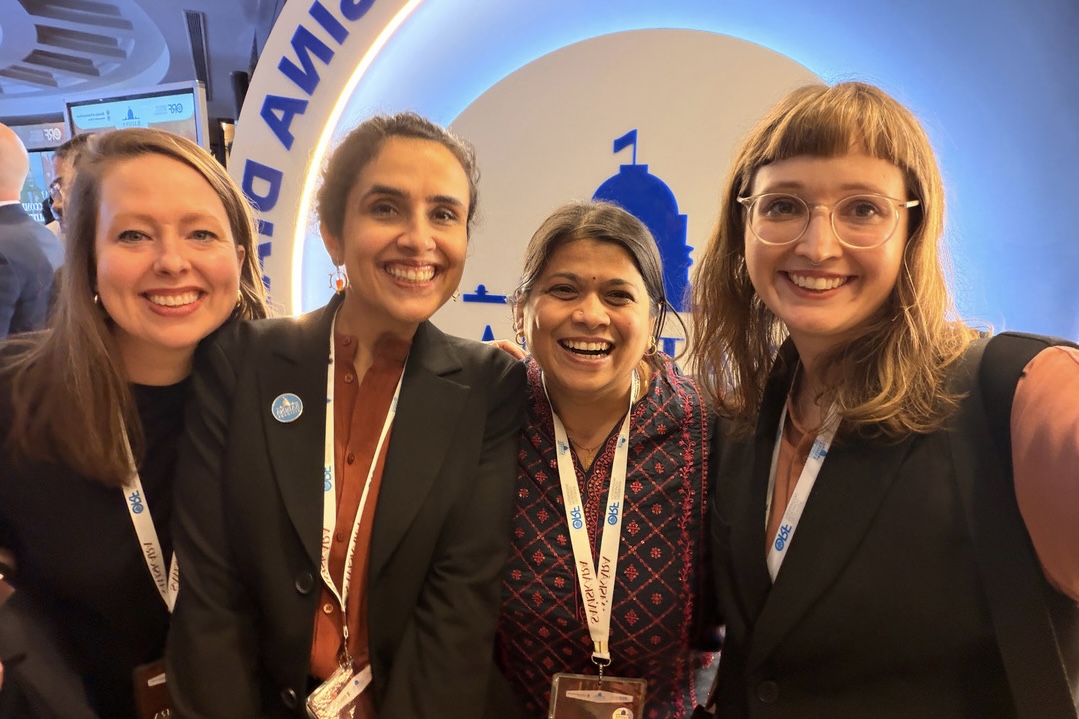
IGMN Board members at Raisina Dialogue 2026.
Text: Ankush Kumar
Photos: IGMN